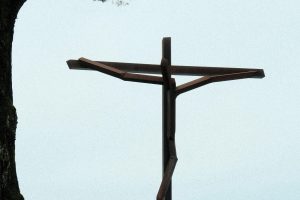
The current debates about God’s existence hardly lift us up to transcendence. Karen Armstrong shares a vision of faith that is less about proofs than practice.
Karen Armstrong has met atheist Richard Dawkins a number of times. “He doesn’t like me, and I don’t like him much, but we are British, so we smile politely and exchange pleasantries,” she says. “We have been on panels together, but it’s absolutely pointless.”
Indeed it’s difficult to argue with the ideas she’s put forth in her new book, The Case for God. While her critics may say that she never “proved” her case, this is her point-God isn’t a concept to be proved.
She’s come to her understanding-or acknowledgment of her lack of understanding-of God over a lifetime of religious experiences. As a young Catholic desiring to experience God, she joined the Society of the Holy Child Jesus and spent seven years in the convent. She left disappointed and sick, and rejected faith. “I never thought I’d come back to religion, but what brought me back was the study of other faith traditions,” she says.
The author of more than 20 books, Armstrong says her spiritual practice is now study, which she likens to the practices of Benedictine monks. “When I’m sitting at my desk, I will get moments of awe and wonder and transcendence,” she says.
But that experience doesn’t stop at her desk. Her study led her to launch The Charter for Compassion in November. Her goal, she says, is “to restore compassion to the central place of religious life.”
How do people understand God in Western culture today?
The idea of God is treated as fact today. A lot of people see God as a discrete personality; God is a creator in the same way as you or I create something.
In the 17th century in the West and during the Enlightenment, scientists and philosophers such as Isaac Newton and René Descartes believed that they could prove God’s existence scientifically. They said science was the best path to all truth. The other ways of coming to truth, such as art or mysticism or ritual, were downplayed. God became a fact, pure and simple.
What’s wrong with seeing God as fact?
Theologians like St. Thomas Aquinas have said that God doesn’t exist like you or me or this chair. They said you couldn’t say God exists because exist is too limited a word.
That wasn’t meant to just put the kibosh on all discussion, but to acknowledge the inadequacy of speech about God and to make room for a sense of transcendence. One Catholic British theologian has defined theology as speech that’s segues into silence, rather than worthy statements and definitions.
The scientific “proofs” of God are being disproved. That could be a good thing because it could shock people out of this literal thinking, but they don’t always get much help from clergy on this. Clergy fell in love with science, too. We have developed a kind of lust for unsustainable certainty.
Science and religion are often cast as opponents today. How has the relationship between them changed?
Science and religion once were best friends. Seeking absolute certainty, churchmen and theologians made Newton’s God-the original cause and all-powerful being that controlled creation through Newton’s theory of universal mechanics-central to their mission, later adding naturalist William Paley’s understanding of God as an “intelligent designer.” In the 19th century the one Enlightenment thought that evangelicals seized upon was Newton’s scientific proof of God.
Then Charles Darwin found a natural explanation for life itself, and this threw religious people for a loop. They had no other resource to understand God except as creator so they developed defensive fundamentalism with a growing antagonism toward science that hadn’t been there before.
In the fourth century St. Augustine said that if a biblical text contradicted science, believers had to find a new interpretation of that text. That was the practice right through to the 17th century. Even at the dawn of the scientific revolution, a witty Vatican cardinal said that in the Bible the Holy Spirit is telling us how to go to heaven, not how the heavens go.
In the past people knew that science and religion had different goals; they were complementary. Science can help you diagnose and treat your cancer, but it cannot touch the despair and dismay and terror you feel when you get the diagnosis, nor can it help you die well. For that people turn to religion, or more broadly speaking, to myth, the stories and beliefs that, when put into practice, answer our deeper questions about the more elusive, puzzling, and tragic aspects of our human predicament.
What happens to religion when you mix science and faith?
People thought that science would absolutely refute atheism, but once you have domesticated God and reduced God to a mere fact, atheism is only a matter of time. Religious language must always point beyond itself into the silence of transcendence. If it becomes an end in itself, religion becomes idolatry.
You can see that in the early modern scientists. Newton says he found proof for an omniscient, all-powerful, dominant force, who is, Newton claims, “very well skilled in mechanics and geometry.” This is clearly a projection of Newton himself.
Mathematician and astronomer Johannes Kepler is said to have cried aloud in joy while doing his research, “O God, I think thy thoughts after thee.” That’s idolatry.
What was the Catholic reaction to this perspective?
Catholic theology goes for the modern, scientific God, too. The 16th century was a time of turmoil. Society was changing so much that people couldn’t be religious as they were before the Middle Ages. The Reformation split Europe just as the first modern nation-states were forming. The so-called wars of religion were tremendously aggressive on all sides. Italy was overtaken by Spain, and Rome got sacked.
It was a jolly bad century, and the Council of Trent and especially the Vatican reflect a very defensive, hard-line church. Everything becomes more streamlined than it was before, more hierarchical and more hard-valued. They took Thomas Aquinas and turned his theology into a rigid system of thought that he would have found absolutely repugnant.
How were Aquinas’ ideas changed?
In his Summa Theologica, Aquinas starts out by saying we cannot define God. Then he gives five ways, as he calls them, to think about God, all variations on the fact that nothing can come out of nothing: the intelligent designer, the first cause that must have started the universe, and so forth. He ends each way by saying this is what everybody means when they say “God.”
Then he immediately pulls the rug out from under our feet, saying that we have no idea what such a being is or how it can exist. We can’t even say it exists. All we’ve proved is the existence of a mystery.
If he were here today, Aquinas would be asking us to try and think of life before the big bang. He was doing cutting-edge science in his day, pushing reason as far as it could go.
But the Vatican later presented his ways as factual proofs and made people believe that you had to sign on the dotted line. It was a new hard-line orthodoxy. People were put to death over this.
How did this development in theology affect people’s belief?
Belief started to be about ideas instead of practice after the scientific revolution, the Protestant Reformation, and the Council of Trent. Catholics never went quite as far as the Protestants in this because Trent was still very concerned with ritual-tidying up the liturgy and telling people to go to Mass.
Religion is a practical form of knowledge. You learn by doing it, like dancing or driving or swimming. You can’t learn to swim by reading a text; you just have to get into the pool and flap around until you acquire the knack. It takes years of disciplined, dedicated hard work before a dancer can move with grace, but if she works at it, she can take human movement into a new sphere.
Religion does the same, and in all the traditions you adopt a disciplined way of life and take part in rituals that teach the mind to go deeper than the rational level. Praying five times a day helps Muslims get beyond the preening, prancing ego. When you interrupt your work and point yourself in the orientation of Mecca, you’re reminding yourself of your true priorities.
In the ancient Benedictine tradition, you don’t just get it all in one go. It requires a monk to develop very slowly over years of practice. St. Ignatius, on the other hand, embraced the new efficiency of modernity. Ignatian spirituality is a crash course in mysticism. One 30-day retreat, and you’re set.
Religion is hard work. Above all it demands a compassionate lifestyle. This is the test of religiosity in every single one of the major world traditions. Most of our doctrines were originally calls to action.
How so?
Incarnation is a call to action. St. Paul says that Jesus was in the image of God, but he didn’t cling to that; he emptied himself of ego and took on the likeness of a servant and even accepted death on the cross, for which reason God exalted him. Paul introduces this concept by saying you must have the same mind as Christ Jesus: “Do nothing from selfish ambition or conceit, but in humility regard others as better than yourselves” (Phil. 2:3).
Religious truth makes no sense unless you put it into action. It remains as dry and abstract as the rules of a board game, which sound incredibly dull and incomprehensible until you pick up the dice and play.
Are there other doctrines that could help us recover the sense of religion as practice?
We never really got Trinity in the West, but it was also a spiritual practice.
In the early Greek church, the Trinity would be imparted not just as a jingle–“Three in one and one in three, oh, the noble Trinity”–but as a meditation after the transformative initiation of Baptism.
You swing your mind back from the three manifestations of God that we can sense, to the ousia of God, the one that we can never know, backward and forward. The doctrine is simply the end of the meditation.
You have to go through the meditation and keep doing it all your life to understand Trinity. It’s described very much as a transcendent experience. Ancient theologians were trying to remind Christians that it was impossible to think about God as a simple personality.
But Christians do think of God as having distinct personalities, including that Jesus is God.
To say Jesus is God is a partial expression of the divine. God is unnamable. You can never know the essence of the divine. But God has adapted this ineffable transcendence to our limited understanding and has come to meet us. So Christians have experienced God as Father, a sort of brooding, sort of caring presence; as Spirit immanent within us; and as Word, which is spoken in Jesus and in creation.
These are the external, like my gestures and my clothes and my words are me. But they don’t exactly define what “me” is. We know God’s external qualities, but we can never know his ousia or inner nature.
How is the experience of transcendence connected to compassionate action?
You won’t get transcendence unless you are compassionate. To be compassionate is to dethrone yourself from the center of your world and put another there, to transcend yourself. You go beyond the selfishness and hatred that imprisons us and limits our vision.
Today we concentrate so much on defining what we’re transcending to–God–whereas in the past they concentrated more what we’re transcending from: selfishness, greed, hatred, all of which springs from ego.
But isn’t the goal of faith to get to heaven, “to meet our Maker”?
I’m not interested in the afterlife. When Jesus talks about the kingdom of heaven, he means something very earthbound. The kingdom, the reign of God on earth, is a Jewish concept, and Jews don’t go much for afterlife.
Paul says, “What no eye has seen, nor ear heard, nor the human heart conceived, what God has prepared for those who love him” (1 Cor. 2:9). That is, he doesn’t know. If that’s good enough for St. Paul, it’s good enough for me.
If all religious life is reduced to getting into heaven, and all your good deeds are about getting up there, as it was for me as a child, this is no more religious than paying into a retirement annuity. Heaven is supposed to be about the loss of ego, not about preoccupation with its eternal survival in optimum conditions.
Also, if we do not experience a bit of the eternal now by hard, dedicated practice, it’s no good thinking we’ll get anything like that after we die.
The Case for God responds to today’s militant atheism, like that of Richard Dawkins, but you also say in the book that you would welcome “an informed atheistic critique.”
I would, but Dawkins’ critique is not informed. Richard Dawkins on theology is frankly painful to read. As British literary critic Terry Eagleton said in his review, “Imagine someone holding forth on biology whose only knowledge of the subject is the Book of British Birds, and you have a rough idea of what it feels like to read Richard Dawkins on theology.”
I don’t like the regression of the dialogue on either side. It is uncompassionate, counterproductive, and all about ego. But an informed critique could help us rid religion of idolatry and see the ineffability of the divine.
But now people are defensively hanging on to a concrete image of God, and once people get defensive, they can get aggressive, too.
How should we respond to atheism?
We need a rethink. We can’t reproduce the spiritualities of the past because we are 21st-century people, but we can learn from history and make the huge creative effort to translate its wisdom into our own time.
That’s going to be hard work, and people have gotten lazy about religion. They think it should be easy. They go in and sing a couple of hymns once a week at Mass and then return to their normal lives unscathed by the demands of the tradition. I think we need to reinstate the idea of religion as primarily practice.
What do you think of Pope Benedict XVI’s attempt to respond to the wider culture where Catholicism and religion in general is losing influence?
If he thinks all Europeans are going to become Catholic, this is just not going to happen. He has not been good with other faiths, either.
I’d tell him, let’s go into dialogue prepared to be changed. That’s the only way dialogue works. Go into dialogue as you did in Socrates’ day, prepared in the end to realize that you knew nothing, to realize transcendence. No one can have the last word on God, and we can learn so much from other people’s insights.
What about the fear that this will lead to relativism? Is there value in each community pursuing its own path?
I think that’s the best way, even though I can’t do it.
Catholics in England have been so vile to me over the years that I don’t feel like I can go back to the church. I can’t become Anglican, though, because in England Catholics never feel quite English, and Anglicanism is a celebration of being English as far as I can see. Islam and Buddhism are out of my culture, too.
I don’t recommend my course to anybody else. This is just the result of my own personal, troubled religious history, and I healed myself by studying other faiths.
I think it’s best to stay with your own because all the religions teach the same thing-compassion. Stress those aspects of tradition that speak of compassion and practice and humility and openness.
I was with the Dalai Lama at an interfaith conference once when he told a woman that converting from Christianity to Buddhism was a complete waste of her time. All faiths teach kindness. My religion is kindness, he said, and as for the highest states of meditation, he said, don’t even go there.
The religions are not all the same. They each have their distinct genius, each their distinctive flavor, and each their particular flaws and failings. It’s best, I think, if you can, to remain with one but learn from others.
What do you make of those who say they are “spiritual, but not religious”?
I can’t stand that. Spiritual often just means some kind of wishy-washy me-ism, where I’m having a lovely experience without much discipline. You know, designer Kabbalah in Hollywood or designer yoga.
Yoga is not about aerobic exercise or finding the lovely oceanic peacefulness about yourself; it’s about dismantling the ego. It demands hours of practice every day, not just a yoga class once a week. We’ve watered it down to be some kind of feel-good thing.
Some of the late medieval, early modern mystics who threw out all intellect in favor of spirituality were criticized for sitting around looking as if they had a bug in their ear because they only looked within themselves.
Spiritual can mean, “I feel very spiritual when I look at the sunset, but I’m quite happy to slag off Islam and not to give any money to charity. I’m quite OK with the fact that we’ve messed up the Middle East and people are dying every day in Iraq-not just our soldiers but others who are dying as a result of our mistakes. I’m quite happy with the inequality of our social system.” That is not proper spirituality.
Feeling is neither here nor there. You’ve got to get deeper than feeling. We know in our own lives that feelings come and go. Like Aquinas said, you can’t feel God any more than you can know God.
If believe, feel, and know are out, what verb do you think best captures your relationship with God?
Seek. I seek and will seek forever without possibility of finding the clinching moment.
This interview appeared in the January 2010 issue of U.S. Catholic (Vol. 75. No. 1, pages 24-28).
Image: Photo of Karen Armstrong by Megan Sweas
Read about Karen Armstrong’s Charter for Compassion.