
Logo

When enough is enough

Thursday, April 23, 2009
When enough is enough
ShareThis
Why a future of endless economic growth is not the cure for what ails the earth.

After wandering around an academic wilderness for 30 or so years, a fella might be forgiven for indulging in a little schadenfreude before the spectacle of the West’s recent mind-bending fall from grace. But University of Maryland professor Herman Daly, a veritable John the Baptist of alt-economics, has a little trouble savoring the sudden relevance of his long-neglected theories of sustainable economics.

“Everyone likes to be proven right, I guess, but there is so much suffering related to this,” he explains. “I am very worried about what’s going to happen to my children and my grandchildren, and my students are having a terrible time finding work.”

Daly is also the grandfather of a school of economic thinking that casts a definitively colder eye on traditional views of the global economic order. His steady-state economics is a subdiscipline that adds another “eco,” as in ecology, to the issues that should most concern practitioners of the dismal science. It tries to discern how economic systems can comprehensively benefit humankind without sucking the planet completely—and permanently—dry in the process.

Faced with an unprecedented meltdown of global markets and financial structures, even the once proudly unconventional Barack Obama reaches for the traditional prescription of Keynesian stimulus to move the nation out of the crisis which has engulfed it. What is the plan? One that makes Daly wince a little.

We are going to grow our way out of economic meltdown, just as in a prior generation we tried to grow our way out of a cultural malaise or grow our way out of wealth maldistribution by “rising” all boats—even ones springing great gushing leaks—on an economic tide of apparently limitless expansion. Problem is no one has taken a step back to ask if all that growth were healthy for the United States—or the earth itself—or just a kind of consumptive malignancy that would one day devour us. We may have an answer now.

The president says that the crisis, serious as it is, also offers great opportunity for reimagining our future, and no less a go-go globalist than The New York Times’ Tom Friedman now counter-cheers a reevaluation of our role as the grand consumers of the world. But are these guys asking us to examine our collective conscience just so long as it takes us to figure out how to reboot America’s newly ailing economic order?

“Everyone is just talking about how long it will take to get the economy going again,” says Daly.

He has been making the point since at least 1994, when he retired from the World Bank, that something more substantial may be required if we are to right this great spaceship we journey upon. Daly proposes a future of economic gradualism, a global order that is “slower by design, not by disaster,” a system that recognizes that the free market system does some things well and some things, well, not so much.

One thing it hasn’t managed terrifically is its “sourcing” of the biosphere, where market maximalism means even vast extractive enterprises are captured as economic goods even as they frantically deplete finite resources that ought to be conserved for the future.

Daly argues there is such a thing as “uneconomic” growth, that is, growth that may appear beneficial because it generates jobs and wealth, but that does cumulative, measurable long-term damage to biosystems. “GDP is our idol,” he wryly notes. “We basically worship it, and eventually that begins to cost more than it’s worth.”

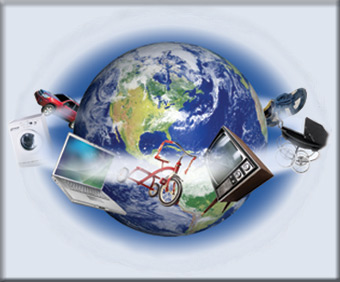
Relentless growth has been treated as an irrefutable economic good. What Daly proposes is a planetary order based not on permanent expansion, but on rational distribution and closed economic systems such that the earth’s carrying capacity is not ultimately diminished by human economics.

Daly’s stewardship model dovetails nicely with Catholic social teaching on the proper role of the economy and the just—and rational—distribution of goods in human life.

As for Washington’s growth-addicts, Daly has simple advice for President Obama. “Don’t listen to the guys who got us into this mess,” he says.

Kevin Clarke is senior editor at U.S. Catholic and online content manager for Claretian Publications. This article appeared in the May 2009 (Volume 74, Number 5, Page 46) issue of U.S. Catholic.

Comment viewing options

Select your preferred way to display the comments and click "Save settings" to activate your changes.

Economy and growth

This article and these comments remind me of my days in elementary school - why can't we all get along?, etc. You want control of the economy, your life, how you live etc? You want redistribution of wealth so that all can live equally? Well you are getting it with President Obama - it's called socialism with a Marxist twist. There is nothing wrong with profit and growth but there is a lot wrong with relativism and giving up God. That is where we are heading - the same road that Rome traveled. Sad to say, we are being lead by President Obama and a lot of mislead catholics.

Economy 101 and growth

Al, you forgot to mention that our own government is as greedy and corrupt as some corporations. The paradox is our economic system that is in use today was arranged by our government by not enforcing and corrupting the U.S. Constitution, Bill of Rights, and Articles of Confederation. God handed our nation the gift of freedom and liberty. Our Founding Fathers expressed that if these gifts were not cared for righteously, which our leaders and/or our Catholic leaders could destroy when evil is afoot, this great nation would lose its gifts of freedom and liberty to tyranny. Our Lord Jesus along with his teachings never promoted the redistribution of wealth, health care for all, run or anything else for that matter to be run by the government without corrution and greed! When has the government of any country improved the quality of life for its citizens and lowered the cost without affecting the quality of service?

Al, there's nothing wrong

Al, there's nothing wrong with profit and growth true, but there's plenty wrong with greed, it's not one of the deadly sins for nothing. Todays corporations are just plain greedy, for them enough is never enough.

But we all seem to have a

But we all seem to have a definition of "greed" that conveniently excludes ourselves. It's always "that other person who has more than I do." Turning these vaguely-defined moral concepts into a functioning economic model is pretty much impossible.

In any case, I wouldn't trust a guy who spent $750 million dollars on his presidential campaign to decide when "enough is enough"!

when enough is enough

The problem with the idea of sustainable capitalism is that the capitalist system seems to demand growth or, as Immanuel Wallerstein says, "endless accumulation of capital". A steady-state economic system, i.e. one that would be sustainable over a long period of time, might resemble socialism more than capitalism.

What socialism?

Socialism has been around for many centuries, the most modern expression would have been under Hitler. Are you misleading everyone? A Socialistic system of government God is out – does not exist – will no longer be expressed – my Catholic faith gone - get it???? And you and/or would go to prison or some kind of camp or death for people having faith in God.

when enough is enough

I agree with Daly. We should be observing the natural world and study biblical principles more to inform decisions on how to manage economy. Biblical figures did this too. Examples: "Every 7 years let the land lie fallow" (there is only so much the earth can give- it needs recovery time). The seasons tell us there are periods of growth and expansion and the "produce" that becomes abundant, but then periods of no "produc"tion-alot is happening however during the slow or nonexistent growth of non producing seasons, roots are growing "down", absorbing new energy and life to be able to produce and provide again. Orgs,economies, like nature, should be expanding and contracting, birthing and dying, producing and resting, etc.Any good org or economy doesn't make it all about numbers. Even in sales, the good salepserson might sell alot, but would recognize that a rest from selling would help the org and salesperson rest and prepare for a next wave of sales, have time to reflect on the world around them to manage what they want to sell and how and for how much. Even the bears gather and sleep. Imagine if the world could just slow down, reflect and listen a little more.

We really need to get back to the land, and invest in producing our own food and energy.And as Daly says, gradual change can help alot-for example imagine if 20 years ago when it was well known that it would do good for us to not rely so much on fossil fuels began a slow change in training house builders to build solar panels in homes and auto factory workers to build electric cars-jobs wouldn't have been lost as the same workers would ahve been training as homes and autos gradually changed from fossil fuel to natural energy reliant.Imagine if slowly a transition began 20 years ago to switch from heavy cow product consumption to a more balanced eating culture. Imagine if farms were somehow able to grow what the land is best able to provide, to produce jams and things to not have to rely on constant production. 20 years ago, it could have been predicted what our heaht care system and not just that but quality of every day life of elders would look like if we just trudged on and didnt prepare for new demographics in the world. But everyone is in a hurry to grow, grow, grow, I always personally believe in what I once heard of as "growijng down"-everyone should do that.

Consumerism

Estimation health of our economy is traditionally based on GDP and consumer spending. Instead it should be based on equitable distribution of goods so that everyone has access to food, shelter, and health care sufficient to support a decent standard of living, but not necessarily a luxurious one. We need to learn from this economic crisis that acquisition is not the key to happiness but justice and solidarity with others even outside our family makes life better for all of us.

And who would be the one to

And who would be the one to distribut things equally? SOMEONE SOMEWHERE has to be the boss and usually they are the ones that have more than anyone else...so in the end equal distribution never really means equal for everyone...just little for the general masses and MORE for those that distribute it.

Amen.

Amen.

Comment viewing options

Select your preferred way to display the comments and click "Save settings" to activate your changes.
U.S. Catholic insists on a civil and respectful dialogue on our website, following our Comment policy. Comments should be charitable, on topic, and brief. U.S. Catholic reserves the right to delete comments deemed inappropriate. We encourage you to choose your words wisely.