
Logo

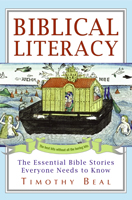
Biblical Literacy: Essential Bible Stories Everyone Needs to Know

Thursday, October 15, 2009
Biblical Literacy: Essential Bible Stories Everyone Needs to Know
ShareThis
By Timothy Beal (HarperOne, 2009)

Timothy Beal wants you-to read the Bible. Actually, he's making the case that everybody should. His argument is simple. The Bible is the literary cornerstone of Western culture. It's quoted ubiquitously, from the corridors of politics ("Am I my brother's keeper?") to the neighbor's nightly card game ("The love of money is the root of all evil, pal"). Since scripture is literally inescapable, don't get left behind, Beal urges. Instead, give in, or at least give in to this neatly edited "Best of the Big Book" and find out once and for all why "the writing is on the wall."

One could offer another reason to read Biblical Literacy that the author doesn't advance: to fall in love with the Bible again. Even believers and long-time scripture fans will find plenty to woo them to this excellent selection of texts. Beal does a fabulous job of connecting the dots between pop culture, high-brow literature, music, the art world, current events, and biblical sources. Reading this book becomes a six-degrees-of-separation game: Do you know the link between a remorseful Bill Clinton and Psalm 51? What do William Blake and John Milton have to do with Chariots of Fire and the prophet Elijah?

Some of the connections are deeply consequential. Abolitionist Frederick Douglass found the will to oppose slavery from reading the Bible at age 8, and oppressed souls on every continent have discovered the path to liberation there.

The Bible's a dangerous book in the right hands, the author suggests, so it's wise to arm yourself in kind. And if ideological warfare isn't your game, then come to Biblical Literacy for the provocative questions: Is the story of Jephthah's daughter a noble wartime sacrifice or "a story of stupid death"? Come also for pleasure reading: mystery stories, romance, and high-stakes action. Or just come for the fun facts. Did you know that Joseph's coat wasn't multicolored? The correct translation is "long-sleeved." Who knew?


This article appeared in the November 2009 issue (Vol. 74, No. 11, pg 45) of U.S. Catholic magazine.

Comment viewing options

Select your preferred way to display the comments and click "Save settings" to activate your changes.

Did you know that Joseph's

Did you know that Joseph's coat wasn't multicolored? The correct translation is "long-sleeved." Who knew?
Wow it really is totally amazing that Timothy Beal is so awesome that he was able to discover that the best bible scholars and translators have been in error for thousands of years!

Umm... maybe not.

http://bible.ort.org/books/torahd5.asp?action=displaypage&book=1&chapter...

A coat of many names....

Pretty toxic comment, GA. Was it really called for? The scholarly commentary you pointed us to confirmed that the Hebrew phrase can be translated as long-sleeved: "Kethoneth passim in Hebrew...The word passim can be translated as 'colorful'..., embroidered..., striped..., or with pictures.... It can also denote a long garment, coming down to the palms of the hands..., and the feet... Hence, kethoneth passim, may be translated as 'a full-sleeved robe,' 'a coat of many colors,' 'a coat reaching to his feet,' 'an ornamented tunic,' 'a silk robe,' or 'a fine woolen cloak.'" So what's really bothering you?

Megan Sweas's picture

I want my money back!

How could Andrew Llyod Webber and Tim Rice let us down?! All I know is that I want my (parents') money back from when we went to see Joseph and the Amazing Technicolor Dreamcoat when I was 12.

Then again, who would want to go see Joseph and... "the Amazing Full-sleeved Robe" or "the Amazing Woolen Cloak"? Sounds boring. Such words don't matter as much as how we use them, and I think Webber and Rice used this word well.

But on a side note, I was actually dissappointed in the show because we got an understudy rather than Donny Osmond.

Comment viewing options

Select your preferred way to display the comments and click "Save settings" to activate your changes.
U.S. Catholic insists on a civil and respectful dialogue on our website, following our Comment policy. Comments should be charitable, on topic, and brief. U.S. Catholic reserves the right to delete comments deemed inappropriate. We encourage you to choose your words wisely.