At a retreat where I referred to Sophia several times in my first presentation, a man suddenly stood up and blurted out: “Just who is this Sophia? Stop assuming that everyone here knows who you are talking about!” His interruption startled me, and it reminded me that many do not know this jewel in scripture, that Sophia in the Bible is hidden from many.
His question was also a challenge because I knew that introducing Sophia would take a while to do. So much of this heritage has been lost and must be recovered. Fortunately, he stayed for the whole weekend, so we had time to talk. I found him open, ready to learn and to grow. As we departed, the two of us had a new appreciation for one another and for the gift of Sophia. He left with gratitude for discovering a new way of relating to the Holy One. I left with renewed appreciation for the journey I have traveled with Sophia.
As I spoke about Sophia, I reflected back to 13 years earlier when I had received a letter one spring day from a publisher asking me to contribute a book to their women’s series. I wanted to say yes but wasn’t sure what I might write. It took me four months before I responded to that letter.
At the time I was caring for my friends’ 6-year-old daughter. We were out in the rose garden where I was enjoying the happy child as she danced around the flowers, singing with glee. While I watched Elizabeth playing, something stirred in me, and I found myself reaching for pen and paper.
I wrote a book proposal on something that had enticed me time and again: my attraction to wisdom in scripture. At that time I had very limited knowledge of the biblical books of wisdom and did not know yet that in the Greek translation the words for Holy Wisdom are Hagia Sophia. I also had no awareness that this Sophia from the Bible would offer me a fresh and deeply profound way of relating to the divine.
Only much later did I realize that the image of little Elizabeth playing among the roses was reflective of the beautiful passage in Proverbs 8 in which Sophia is described as being present at the beginning of creation: “When there were no depths, I was brought forth when God established the heavens, I was there playing before [God] all the while” (Prov. 8:24, 30). It was this connection that elicited my desire to explore and write about wisdom.
That surprising moment was the beginning of a long and wonderful journey of exploration and research. When my book proposal was accepted, I took a deep gulp and asked myself: “Just what, or who, is this beautiful figure that Proverbs describes as a partner with the Holy One?”
Divine Wisdom in the Bible as “she”
I began by reading and meditating each day on one of the scripture passages referring to Holy Wisdom. As I prayed, I noticed how Sophia in the Bible was always referred to as “she.” This amazed me, even though I knew there were many ways to describe and relate to God.
I knew that God was neither male nor female, yet I also knew God to be consistently described as male and referred to as “he” in Christian images and metaphors. Feminine pronouns and figures have rarely been used in speaking of God, even though, as I discovered, there are numerous references in the wisdom literature to Divine Wisdom as “she” and plenty of feminine qualities to describe “her.”
Many people think of wisdom as an “it” rather than a “she.” Actually, both of these approaches are accurate, because there are two types of wisdom in the Bible.
Some passages speak of wisdom as a quality or a truth to guide our lives. Here wisdom is presented as a “thing”—such as wise sayings, proverbs, and moral exhortations. There are many other passages, however, that refer to wisdom as a person. It is here that the feminine pronoun is always used and is consistently reflective of the divine presence. This wisdom is Holy Wisdom: Hagia Sophia.
Historically, the authors of the wisdom literature began this feminine reference to Sophia in the Bible between 33 B.C. and 4–5 A.D. There are only four other figures who are mentioned more than Sophia in Jewish scripture (the Old Testament): Yahweh, Moses, David, and Job. Given this fact, it is quite incredible that so few know much about her. However, I do understand why she has not been recognized because I, too, had a difficult time discovering and claiming her.
When I finished a draft of my book manuscript, I asked a friend who taught religious studies at a local university to read it. When she returned it, she asked, “Well, is Sophia in the Bible divine or not?”
I blanched because, after almost two years of prayer and study of the biblical passages, I still did not know if the references were simply personified metaphors for divinity or if Sophia was truly another word for the radiant presence of the Holy One.
I was scared to respond: “Yes, I think she is more than metaphor; she is an expression of the presence of God.” I still wasn’t sure and I didn’t want to lead anyone astray. It took me another year to be convinced that both “Sophia” and “God” were names for divinity.
One of the marvelous descriptions of Sophia in the Bible that convinced me I was not off on some heretical tangent was what Thomas Merton wrote about her in Emblems of a Season of Fury: “The Diffuse Shining of God is Hagia Sophia. Sophia is Gift, is Spirit, Donum Dei. She is God-given and God Himself as Gift. Sophia in all things is the Divine Life reflected in them.”
Another confirmation was seeing how the Book of Wisdom describes Sophia guiding the Exodus people through the wilderness: “She led them by a marvelous road. She herself was their shelter by day and their starlight through the night” (Wis. 10:17). This passage was clearly another way of speaking about the faithful God who “went in front of them in a pillar of cloud by day and a pillar of fire by night” (Exod. 13:21). I was finally convinced that Sophia was truly another way of naming the divine.
How the treasure got lost
Sophia was not always hidden. There are at least three major reasons why this treasure has been missing from our spiritual heritage.
The early church knew Sophia well and prayed to her. But many Greek and Egyptian goddess cults still existed at this time, and there was concern among Christians that worship of Sophia would be associated with these cults. Some of the qualities ascribed to the goddesses were similar to Sophia’s attributes—particularly those of the Egyptian goddess, Isis, who was renowned for her wisdom and guidance. Fear of the goddesses was one reason why the early Roman church gradually disconnected from Sophia.
At the same time gnosticism gained popularity, an early Christian movement whose followers had special devotion to Sophia, crediting her with the creation of the universe. The gnostics had an immense longing for the interior life and for the hidden things of God.
Eventually they were charged with heresy, not because of their love for Sophia, but because they rejected the material world. In their passion for the interior life, the gnostics valued only the spiritual and intellectual realms. They taught that Jesus was never incarnated, that salvation was to be attained only through knowledge of the inner self.
This left the early church in a bind; they believed in Sophia, yet rejected gnosticism. As the church distanced itself from the gnostics, it also turned away from devotion to Sophia for fear of appearing to approve gnostic beliefs.
A third development leading to the loss of Sophia was the theology of first-century philosopher Philo of Alexandria. As a Jew, Philo was very familiar with Sophia. He taught that the Divine Origin (Yahweh) had created Sophia first and then Logos (the Word) as a balancing companion. He envisioned these two working together in shaping creation: Sophia, the feminine or creating vessel, and Logos, the masculine or active doer.
There are various theories as to how Sophia was eventually left out of Philo’s approach. Some historians say it became difficult in his work to separate the Logos from Sophia, so gradually only the aspect of Logos was kept. Others say it was a strong patriarchal emphasis on the masculine that caused the feminine to be eliminated.
For a time the early church referred to Sophia in terms comparable to that of the Holy Spirit, but this, too, gradually diminished and was lost. Whatever happened, one thing is clear: There are striking parallels between the attributes of Sophia in the Bible and the qualities of Jesus. There is much about Jesus that is like Sophia.
In Jewish scripture, Sophia is a feminine voice, in contrast to a God of dominion and force. Jesus, too, has a Sophia heart, not the heart of someone seeking power. Sophia is concealed but ready to reveal just as Jesus is “the hidden wisdom of God” (1 Cor. 2:7), “the revelation of the mystery kept secret for endless ages” (Rom. 16:25). Both Sophia and Jesus are brought forth by God, and both are sent by God to be special messengers to humanity, bringing wisdom, counsel, and guidance. Each is a healer and a comforter, a messenger of truth, perception, and guidance. Both are teachers who instruct in the ways of God, and both are referred to as “light.”
Sophia as a spiritual treasure
I have come to know and love Sophia. The qualities attributed to her in the various wisdom passages have greatly influenced my spiritual life. I will never be the same because of her. That is why I completely understood and loved it when a participant at a workshop asked me, “Could you speak about Sophia? My spiritual director introduced me to her a few years ago and this has changed my life.” That man’s question gave me an opportunity to talk about the beautiful gifts for spiritual growth that Holy Wisdom offers to those who seek her.
The Book of Wisdom (often attributed to the wise King Solomon but actually authored by an unknown writer) has many beautiful passages about Sophia. In Chapter 7 she is described as being “the breath of the power of God, a pure emanation of the glory of the Almighty, a reflection of eternal light, a spotless mirror of the working of God and an image of [God’s] goodness” (Wis. 7:25–27). One could spend a year just pondering this chapter with its rich presentation of Sophia as a radiant, indwelling presence shining in our midst.
Sophia in the Bible has depth and is full of mystery. While she is “readily seen by those who seek her” (Wis. 6:12, Sir. 6:27) and is as near as our next breath, she is equally full of mystery and needs to be discovered: “Happy is the person who meditates on Sophia, who reflects in one’s heart on Sophia’s ways and ponders her secrets, pursuing her like a hunter, and lying in wait on her paths” (Sir. 15:20–22).
Attentiveness and alertness are essential in finding Sophia. Both Proverbs and the Book of Wisdom present Sophia as sitting by the city gates, crying out at the busiest corners by the entrance to the city (Wis. 6:14, Prov. 1:20–21). The gates of biblical times were the entrance into the marketplace or heart of the city. Symbolically, the gates where we meet Sophia today are in the midst of our busy, marketplace lives. It is here that we can still discover Divine Wisdom, who is always ready to guide and direct our lives if we are aware of and open to her.
There are many other metaphors for Sophia in the Bible. She is a teacher: “Hear, for I will speak noble things. Take my instruction” (Prov. 8:1–11); a mother: “She brings up her own children” (Sir. 4:11–18); “the tree of life” (Prov. 3:8, Wis. 10:17–19, Sir. 14:20–27); and true wealth: “more precious than jewels” (Prov. 3:15). She is also described as a counselor, a fine mist, light, and the law. Sophia provides healing and shelter, gives rest, and offers what is needed for spiritual transformation.
I count on Sophia to influence my attitudes, values, and beliefs, to help me make good choices and decisions. I pray to her each day to guide me as I try to reflect her love in all I am and all I do. Whenever I am in doubt as to how to proceed in my work and relationships, I turn to Sophia for wisdom and courage. She has never failed to be there for me.
How do we find her?
One day as I concluded a talk on Sophia, a woman asked me: “You told us how Sophia got lost. Now tell us: How do we find her?” I suggested that she begin by reading, studying, and meditating on the Sophia passages in the Bible and that she take a metaphor or a name for Sophia in the verses, breathe it in and out, letting it permeate her whole being. “Most essential of all,” I responded, “is to ask Sophia to reveal herself to you.”
We need to look for Sophia. By her very nature she is relational, present in the world, interacting among people and ordinary human lives. By desiring to know her, by opening our minds and hearts, her radiance will permeate our lives. Such is what happened recently with a concerned mother who was having much difficulty with her two young daughters, who were sulky and disruptive.
One day after work she sat alone in her car feeling sad and troubled. She called on Sophia for guidance and insight, praying quietly for some time. Then she drove home, sat down with her daughters, and together they came to some much-needed household compromises that made all of them more peaceful and happy.
Prayer is vital in discovering the treasure of Sophia. This helped me the most in finding her and establishing a faithful relationship.
I believe it is time for Christians to recover the richness of this heritage of the divine feminine that has been lost. We need Sophia now more than ever. We need her compassionate presence and her ability to help us see clearly in the midst of a world that cries out for wisdom and love.
Sophia will not fail us. She will always draw us deeper and further for there is no end to the mystery of her life with us. “The first person did not finish discovering about her nor has the most recent tracked her down; for her thoughts are wider than the sea, and her designs more profound than the abyss” (Sir. 24:28–29).
Joyce Rupp is a bestselling author and spiritual director in Des Moines. Among her most recent books are Prayers to Sophia (Innisfree) and The Cosmic Dance: An Invitation to Experience Our Oneness (Orbis).
Recommended books about Sophia:
Wisdom’s Feast: Sophia in Study and Celebration. Cady, Ronan, Taussig. San Francisco: Harper and Row, 1984.
Who is Wisdom-Sophia? Meditations Based on “Love of Eternal Wisdom” by St. Louis de Montfort. Daughters of Wisdom: Wisdom House, 229 East Litchfield Road, Litchfield, CT 06799-3002.
She Who Is: The Mystery of God in Feminist Theological Discourse. Elizabeth A. Johnson. New York: Crossroad, 1993.
Divine Sophia, Holy Wisdom. Robert Powell. Nicasio, CA: The Sophia Foundation of North America, 1997.
The Star In My Heart: Experiencing Sophia, Inner Wisdom. Joyce Rupp. Innisfree Press: Philadelphia, 1990.
Sophia: Aspects of the Divine Feminine Past and Present. Suzanne Schaup. Nicolas-Hays, Inc. York Beach ME 1997.
In Memory of Her: A Feminist Theological Reconstruction of Christian Origins. Elizabeth Schussler Fiorenza. Crossroad: New York, 1983. (c.f. pp. 130–140, “The Sophia-God of Jesus and the Discipleship of Women”).
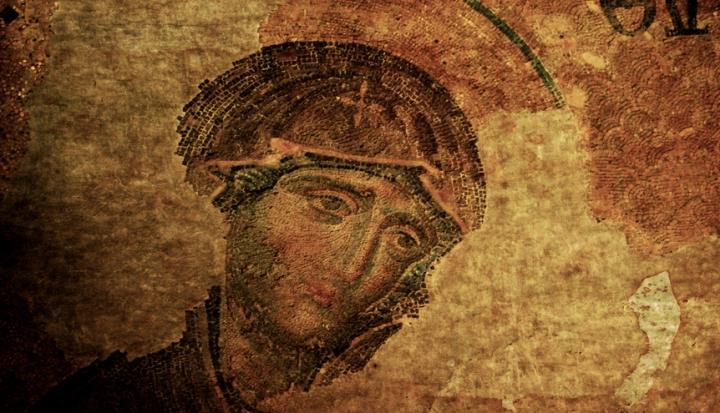
Image: Flickr cc via Νίκος Νιοτής