

Why Catholics and Muslims must keep talking
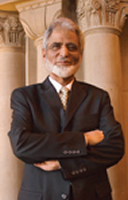
Sayyid Syeed, former secretary general of the Islamic Society of North America and a member of the Midwest Region Dialogue of Catholics and Muslims, speaks glowingly of the dialogue with Catholics that began under Pope John Paul II. "We were stretching out our hand, and from the other side a hand was even more firmly stretched toward us," he says. Despite recent setbacks, Syeed remains optimistic. "According to the Prophet Muhammad, God has said, ‘If you come one step toward me, I will come 10 steps toward you.' We have actually experienced that."
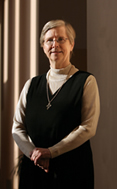 As former executive director of the Monastic Interreligious Dialogue between Buddhist and Catholic monks and nuns, Sister Margaret Funk, O.S.B has great confidence in interfaith conversation. "When we encounter other religions and their believers, we learn to dwell harmoniously together and to maintain our distinctions without feeling insecure," she says. Her experience with Muslims has confirmed her trust in interreligious dialogue. "This conversation frankly has a common sense that will prevail. Because of that, I'm very hopeful about the future."
How do both Islam and Catholicism approach interreligious dialogue?
Funk: From the Catholic perspective, the purpose of dialogue is harmony and unity among human beings, as well as a shared responsibility for the next generation and for quality of life now. From a religious perspective, it is to experience God from our various points of view and to be respectful but also informative.

Vatican II opened an enormous door with Nostra Aetate, the Declaration on the Relation of the Church to Non-Christian Religions, which definitely had an inclusive rather than exclusive view of other religions. It says that there are many lights in other traditions. Pope John Paul II continued that openness, which allowed us to see other religions as good in and of themselves. We can now come to the table in a way that neither of us is trying to convert the other.
I have no need to accommodate all Islamic beliefs. I can just let it be. What I've tried to do is understand Islam in all its integrity, how the pieces all fit together. Still, I think the Catholic Church has a little difficulty in letting those languages be as good and truthful as ours.
The way I look at it is that we're all going up this mountain to God, and some people are coming up the other side. They have a God experience, as I do, and I need to continue with my integrity all the way up my side of the mountain to reach the fullness of my revelation. They must maintain their own integrity as well. That's the way I come to the table.
Syeed: Islam does not claim to be a new religion; it is a continuation of humanity's long experience with God. Muslims believe that God sent messengers to every people, in every age, until Jesus, whose message was not limited to one particular ethnic group. When Muhammad came, his message reached almost everywhere, whether people accepted it or not. Therefore after Muhammad there are no further prophets.
But a Muslim knows that Muhammad is the last of many prophets. Therefore it is a fulfillment of the Prophet Muhammad's mission to be aware of the role played by prophets before him, and then to compare and contrast approaches taken by different prophets at different times. That's a theological necessity.
The Qur'an also has a special affinity with Judaism and Christianity. These two religions, along with Islam, are considered "religions of the book." There are several verses in the Qur'an that require Muslims to create common space where one can invite people of other faiths, particularly Christians and Jews, because there is common ground.
In America Catholics especially have a very unique relevance for us because they were once a new religious minority that suffered discrimination. American Muslims are now a new religious minority, and the United States has had problems recognizing minorities, whether political, ethnic, racial, or religious. But Catholics and other minorities have helped America realize its original mission. This is a country where everyone, regardless of religion, race, or color, has an opportunity to contribute, and we hope to contribute as well.
The way the media tends to portray it, Muslims want everyone to be Muslim, which would be a different vision than what you're both talking about.
Syeed: If that vision were enshrined in the Qur'an, then it would be my vision as well. But the Qur'an is the only religious scripture that emphasizes again and again that diversity is an expression of divine Providence. You have verse after verse saying that God has created people in different colors, of different races, and is responsible for different languages. The Qur'an says that it is God's plan to have different religions, otherwise he would have created all of us with the same persuasion.
But it's true that today in the Muslim world things are very different, and some Muslims believe that all people must become Muslim. I would argue that those who are taking Islam in this direction are hijacking it, and the Qur'an gives me the moral strength to make that argument. The glorious moments in Islam have been moments when Islam recognized diversity.
Has the idea of interreligious dialogue been challenged within the Muslim community?
Syeed: Some Muslims have had a very bitter experience with Christians. The majority of Muslim countries were occupied by the European colonial powers. Christianity was a part of that colonial expansion, and for Muslims in those places, it symbolizes a hunger for colonialism. Therefore it is tougher for some to separate the colonial experience and the compassion of Jesus.
But in America we are in a position to reconnect ourselves with Christians. I remember in the 1970s and '80s I was going from congregation to congregation arguing that we have to deal with Christians and Jews in America with a different worldview. They are not the ones who came to our countries and occupied us. It was a tough argument. It took effort from our side to emphasize that the positive verses in the Qur'an about Christians and Jews apply here, because we are living together in one society.
Has this become more difficult since September 11 and the war in Iraq?
Syeed: When I started my career in this country as a Muslim leader, I was optimistic that whatever little I accomplished here would have a global impact because this country doesn't have a history of colonialism among Muslims. But to my dismay, this country also became a colonial ruler during the last few years, so my job has become more difficult, and your job has become more difficult. In spite of all our successes, the United States has suddenly become a country that is hated because of its foreign policies, its war in Iraq, its discrimination between Israel and Palestine.
Is dialogue with Islam more difficult for Catholics than with other religions?
Funk: We do have a barrier to overcome here because Islam is not as attractive to most Catholics as, say, Buddhism, because Buddhism doesn't seem to be threatening us. Getting to know the Muslims who are at your office or factory or school as human beings breaks down most of the fear.
I'll give you an example: I was at a Lions Club to give a talk about Islam, and at the dinner beforehand someone asked why the topic was Islam. I asked if there were any Muslims in the community, and the guy next to me said, "Not if I can help it." From there it just got worse.
But when I gave the talk, there were also testimonials from some of the people there about how they'd rather do business with a Muslim than with anybody else, because their money is good, their word is good, and they have quality products. In other words they had their own experience that broke down the ignorance and prejudice.
Are there other reasons this dialogue is particularly difficult?
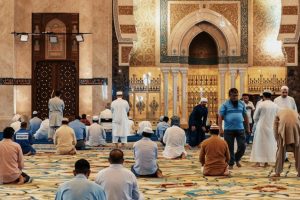
Funk: Some people see Islam as a challenging way of life. Muslim religious practice is closer to mine as a monastic woman than to an ordinary Catholic's. Muslims have to pray five times a day. The diet is strict, the prayer is strict, and the culture is strict.
But it is also true that some Muslims are not assimilating into this culture well. I don't mean they should assimilate indiscriminately, but there has to be good inculturation. I think Catholics can help them assimilate into the culture with discretion.
For example, many Muslims now want to go Muslim schools, exactly as we Catholics did in the 1950s, when we used Catholic schools to keep our identity. The problem is what part of the identity you keep. What protects the vision and the integrity of the Qur'an? That's the dialogue that Muslims have to have among themselves, and it's up to us to receive their decisions with graciousness.
What are some of the obstacles to further dialogue?
Funk: Unfortunately we're still working more on dialogue with other Christians than with Islam, and frankly we should shift all our troops into this interfaith work. When it comes down to it, to me it doesn't matter whether you're Episcopalian or Catholic, but this does matter. When I listen to dialogue among Christians, it seems to me it's more about "taste," and I think we could develop fuller expressions of those tastes and get along just fine.
But the interfaith question is more critical because this is the way we are going to have peace; this is the way we are going to feed the hungry and clothe the poor. The alternative to military intervention is dialogue.
Since the pope's controversial remarks in Germany, some have suggested that Rome may be going in a new direction when it comes to this dialogue. Has there been a significant shift?
Funk: Pope Benedict has entered into the Muslim-Catholic dialogue in a way that is different from the dialogue that began in Assisi in 1986 under Pope John Paul II. This current pope is shifting to a dialogue of culture rather than religion.
For example, under Pope John Paul II the top person in the Pontifical Council for Interreligious Dialogue was Bishop Michael Fitzgerald, a British prelate who was fluent in Arabic and directed Islamic studies in Rome. When Pope Benedict came in, he shifted Fitzgerald to Cairo as ambassador to Egypt and the Arab League, and is folding the Council for Interreligious Dialogue into the Pontifical Council for Culture.
This loss of expertise in part explains why the pope made some rather uncritical assumptions about Islam. In his talk in Germany that caused so much controversy, he gave a history of Christian and Greek thought with the assumption that Islam didn't have the use of reason or philosophy as part of its tradition. That was obviously quite upsetting to the Muslims, especially those who are well educated.
Some Catholics believe the church should be more confrontational in its dealings with Islam.
Funk: Unfortunately the moderate Catholic voice, like the moderate Muslim voice, is not heard much in the public forum.
I wrote a handout called "Islam: What Catholics should know" that was widely distributed; I got over 500 pieces of mail about it-and 480 were hate mail. Many said that the God Muslims worship is not truth and that I'm going to go to hell for all eternity. So obviously we've got to get the moderate voice more centerstage.
We Catholics have to do intra-religious dialogue among ourselves about how to keep the integrity of our Catholic faith, including the respect we need to give our leader, while still speaking respectfully to and about Muslims.
How did Muslims in your community react to the pope's speech?
Syeed: Pope Benedict is a very scholarly person who has spent most of his life in libraries, so I'm sure he was aware of what he was saying. When we heard it, we knew that many Muslims would be very much hurt and that some would express themselves in ways that will damage our common purpose. So we sent out a statement that expressed our disappointment.
Looking back at our history, Catholics and Muslims have fought many wars, and you can imagine what kind of sermons must have been given by priests at that time. Do we want to reproduce those sermons and then at the same time talk about dialogue and the need to bring peace and harmony to the world?
Dante's Divine Comedy, for example, shows the Prophet Muhammad in the lowest part of hell. That reflects the level of confrontation between Islam and Christianity at the time Dante wrote. Today no Catholic would write something about Mahatma Gandhi like that, even though he wasn't a Catholic or even a monotheist. We recognize that he did something for his people, and because of that contribution we are very respectful.
The only path for our world to peace and harmony is the path of mutual understanding. What little we have achieved in America, whether it is ethnic harmony, racial harmony, a certain level of pluralist respect for different religions, is something we have to hold dear. This is what we must show the rest of the world. Otherwise we will have many other Baghdads. Our vision is that the only way to save humankind from that kind of self-destruction is to interpret and reinterpret and reinforce our belief in pluralist, respectful coexistence.
At the same time I see the responsibility that is on the pope's shoulders, because as with the previous pope, I respect him as a world leader.
I never felt that Pope John Paul II only represented Catholics. All my issues were adopted by him: He was equally concerned about Iraq, about Palestinian issues, about the rise of militancy in different religions and so on.
Because he is Pope John Paul's successor, I think we should give Pope Benedict the benefit of the doubt.
One of the things Pope Benedict has been saying is that Christians in Muslim countries like Saudi Arabia should be free to worship as Muslims are in the West.
Syeed: OK, let's take the example of Saudi Arabia. In that country women are not allowed to drive, and to some it looks like that's what the Qur'an or Islam says, which is not true. Islam rather demands that you provide equal education to all men and women. I have six children, three daughters and three sons. I have provided them equal training and education. But in Saudi Arabia, women do not have the same opportunity, and that hurts me.
It hurts me equally that in Saudi Arabia Christians are not allowed to express their faith. I would not worry about it if it were written in the Qur'an that Christians should not be allowed to do so. But Islam does not allow the repression of anything, and the Qur'an is very clear that there should be no compulsion in faith; those are the exact the words of the Qur'an.
If the Qur'an teaches that, why are Christians still not free to practice in some Muslim countries?
Syeed: The problem is that there are certain local traditions that have nothing to do with the universal message of Islam. The regimes in these countries have reinforced their strength and power by using these kinds of restrictions.
We have to understand that we are comparing the United States with countries that have been held hostage for centuries, yet we expect from them the same kind of openness that we have in the West. Many point out that in America 2,000 mosques have been built within the last 20 years, but there are still no churches in Saudi Arabia. What kind of comparison is that? America allowed those 2,000 mosques only after Catholics had to struggle to get Catholic churches built in America.
In the 19th century, when crosses were burned by the Ku Klux Klan, they were not burned at synagogues; they were burned at Catholic churches. America took centuries to realize that Catholics are also Christians and therefore ought to have places of worship. The Catholic struggle taught America that this has to be done. And the American experience has reinforced this whole pluralist environment. We cannot yet expect that from Saudi Arabia today.
Multiracial, multireligious, multiethnic societies are a new experience. If you and I are talking today, it is because for the last two, three, or four centuries in this country people have struggled to create a certain paradigm here that we need to talk. It did not happen all of a sudden. Many religious people died in this process; they sacrificed themselves to create an environment where people of different races and religions can sit together and talk in a peaceful way. So naturally that kind of ideal society cannot come suddenly in those countries. It will take some struggle.
Mississippi and Alabama are very different today than they were 60 years ago. If at that time I had expected them to be what they are today, people would have said I was crazy or dreaming.
Martin Luther King Jr. had a dream. That dream, even today, is not fully realized. Today you and I together are working for that dream.
Did the pope's trip to Turkey help repair some of the damage?
Syeed: All of us were very wary about the Holy Father's trip to Turkey. There was some fear that another misstep might hurt his mission of bridge-building. But he was very careful and calculated in his words and steps.
We are also glad that the Muslim protests did not become violent and stayed within limits. We hope and pray that this first visit to a Muslim country will open more possibilities of positive interaction with other Muslim countries and with Muslim communities in Europe. We also hope that in Turkey he may have gotten some inspiration and insight to understand that the negative experience of our common history is not the legacy we want to live with.
Funk: The primary reason for the pope's trip, of course, was ecumenical reconciliation with our Orthodox brothers and sisters, not interreligious dialogue. It did shift a bit, however, and focused more on the dialogue with culture as a whole rather than religious topics and concerns. This seemed to be quite effective.
Bishop Michael Fitzgerald said to me in a recent e-mail that the pope "praying with the mufti in the Blue Mosque was decisive. This is what the Turkish Muslims appreciated the most." This gesture said in symbol that we worship the same God, and it was backed up by Pope Benedict speaking about our common "Abrahamic faith," acknowledging our worship of the same God. This gesture and words take the dialogue into another stage of respect and relationship.
The next step is for us to act according to this common faith, while maintaining the integrity of Christianity and Islam. Living faith is much more difficult than talking about it.
It is too soon to comment on the far-reaching effect of the pope's visit to a Muslim country. It seems vital to me, however, that we learn that insisting on the superiority of only one way of truthful living under God seems to cause war and violence.


Add comment