When you whispered a prayer this morning while sipping your coffee and eating your toast, to whom exactly did you pray? An old man with a beard somewhere beyond the clouds? Sophia, otherwise known as Holy Wisdom? The Holy Spirit? Jesus? What images of God call to you?
Elizabeth Johnson wants to know. In her new book, Quest for the Living God: Mapping Frontiers in the Theology of God (Continuum), she examines how Christians the world over have experienced the presence of God in new ways since the last half of the 20th century. Theologians agree, she says, that we’re in a “golden age of discovery.”
Even before her groundbreaking 1992 book, She Who Is: The Mystery of God in Feminist Theological Discourse (Crossroad), Johnson has been fascinated by how believers view God. “This might sound a little archaic,” she told Fordham Online, “But I take my cue from Thomas Aquinas—the study of God and all things in the light of God. That articulates for me what theology is about.”
A sister in the Congregation of St. Joseph who hails from Brooklyn, Johnson has been president of both the Catholic Theological Society of America and the American Theological Society. Winner of the U.S. Catholic Award in 1994, she served as a member of the national Lutheran-Catholic Dialogue, a consultant to the Catholic bishops’ Committee on Women in Church and Society, a theologian on the Vatican-sponsored dialogue between science and religion, and on the Vatican-sponsored study of Christ and the world religions.
We’re hearing a lot from atheists today who want to persuade us that God doesn’t exist. What do you as a theologian think about that?
Atheists are rejecting the old images of God that don’t really work that well even for Christians anymore. Just who is the God in whom Richard Dawkins, author of The God Delusion (Houghton Mifflin), doesn’t believe? I found a great quote from a review of his book, in which the reviewer said that Dawkins envisions God “if not exactly with a white beard, then at least as some kind of chap, however supersized.” This is not the Christian God.
Also a lot of the atheists writing today are scientists who just want to clear the deck of God so they can do their science. They’re primarily opposed to the fundamentalist approach.
You’ve said that Christians today have many “stale, worn-out images of God that no longer satisfy.” What are they?
We might be a bit beyond Michelangelo’s image from the Sistine Chapel of the old man with the beard, but nevertheless, God is too often still a “chap.” It’s just assumed that God is this single individual with more power than anyone else, who intervenes now and then to get certain things done, and whom you need to satisfy on a number of levels. Again, this isn’t the God of Christian revelation. When you hear talk radio or people in the press talking about God, this is the God they’re talking about. This image is so unworthy of us.
My daily bread is teaching college students and graduate students, and I find among them that these old images of God just don’t work. Especially as they rebel against their parents, which one tends to do at that stage, it’s even less attractive to have the super-parent idea of God. Both in this and other countries, I see a terrific hunger for a mature faith, but that’s not being fed by much of the preaching that people hear, most of which also uses this stale idea of God.
Where did this image come from?
In the Middle Ages, or even at the time of the Reformation in the 16th century, ideas about God were drawn mainly from scripture and sacramental practice and from people’s spirituality. Once the Enlightenment started in the 17th century, as Western philosophers began to throw off authority and to sort out ideas on their own, theologians adapted that method as well. They began to reason toward the fact of God’s existence on the basis of natural phenomena, and they came up with the idea of a superior being at the apex of the pyramid of being. We call it the God of theism.
What is forgotten in this image is that this God became incarnate, that God is everywhere present in the Spirit, that God is filled with compassion. It became a much more distant God, while at the same time ironically not distant enough because God became just a more powerful player than we are.
This theistic God is also in competition with the world. It’s a zero-sum game: more of God, less of me; more of God, less of the natural world; more of God, less of my own freedom. That is an aberration from the Christian understanding of God, which is that God set the world up in its own integrity and gives us our freedom. The more we have of God, the freer we are. All of this got lost after the Enlightenment.
Before the Enlightenment, were biblical images of God more alive in the church?
I don’t want to paint any age as the golden era, including our own, although I think we’re in a renaissance right now. If you look at the Middle Ages, you see God spoken of as “the fountain fullness overflowing.” Richard of St. Victor speaks of the deep relationality that is at the heart of God.
Theologians in the Middle Ages wrote tomes on these ideas. We didn’t have anyone doing that during the Enlightenment, with the exception of Cardinal John Henry Newman in England, but he went back and read the Fathers of the church, which caused the whole God question to open up for him again.
The Enlightenment didn’t touch the East in the same way. Even today if you read Christian Orthodox theologians, you get a much different sense of the fullness of God’s trinitarian life, inviting the world into communion. It’s so different from this monarchical, solitary ruler God that we have, the God about whom we ask questions like, “Why is God letting this illness happen to me? What did I do that’s wrong?”
What is attractive about this idea of God?
This all-powerful God can bless you or curse you; therefore you better please him to get the blessing and not the curse. That’s a pattern of relationship that people have with their parents. It’s familiar. It brings a certain measure of security. Also many people don’t know any other God. They haven’t been exposed to any other understandings.
There are some exceptions: You see some wonderful renewed parishes, for example, where people are living a more biblical approach to God. And this image of God is not widespread in the Hispanic community, where people have the sense of God walking with them. Their home altars and other expressions of their popular religion all indicate the closeness of God, a whole different sort of relationship.
Hispanic theologians today say that their community did not go through the Enlightenment. Conquistadors brought with them to the Americas late medieval Catholicism, which blended with indigenous religion. While Europe went through the Enlightenment, the believers in the Americas did not.
But in general I think the image of the theistic God is very widespread in our country. You hear it in sermons. And it’s not just me saying this: The U.S. bishops have said that preaching in our country is in a very bad way in terms of the Catholic tradition. The late German theologian Karl Rahner, S.J. was saying the same thing back in the 1950s and ’60s. He said that the words of the preacher fall powerlessly from the pulpit “like birds frozen to death and falling from a winter sky.” I sit and listen to some sermons and I think, “Come on, think of all the wonderful things you could say with this text.”
How does one’s theology of God affect one’s everyday life and faith?
If you’re a believing person, you draw your deepest values from that. How you make moral decisions and vocational decisions, how you treat other people—it all flows from how you see God working.
None of the newer theologies of God are innocent in terms of politics. Every one of the ideas I explore in my book has political implications. They are concerned with power and who uses it and the powerless and how they are affected. So if you let any one of those theologies get into your understanding, you’re going to vote differently, you’re going to volunteer differently, you’re going to use your money differently. Theology, I think, can be very powerful as a tool. It’s my conviction that we all have a theology, so how it shapes your life depends on what it is.
What are some of the theologies of God that you’ve been investigating?
They include images of God from feminist theology, from Latin America and from Latinos in the United States, as well as the God who emerges from encounters with religious pluralism. Also God as envisioned in Europe after the Holocaust, God as seen through the African American experience, and several others.
Each of the new images of God I studied has biblical grounding, each refers in some way to the Trinity, each of them is oriented in some way to religious practice. All of them support the idea that God is deeply involved, deeply concerned with what happens in the world. If you love God, then your heart needs to be conformed and configured to God’s heart. You have to feel that way toward the world as well. There will certainly be differences of opinion about how to do that.
You mentioned the Trinity. This solo God of the Enlightenment doesn’t seem to have anything to do with the Trinity.
The Trinity has been just about lost forever in the West. Cardinal Walter Kasper, who heads the Pontifical Council for Promoting Christian Unity in the Vatican, says the Holy Spirit is the Cinderella of theology in the West, in the kitchen doing all the work while the other two get to go to the ball.
The view of God in classical theism also does not see God through the lens of Jesus Christ, which is basic to the Christian understanding of God. Therefore it leaves out everything that is beautiful and attractive and that makes people want to be Christian. Jesus and his life, death, and Resurrection just don’t factor in.
The new theologies from Africa and Latin America, on the other hand, are examples of a new kind of trinitarian theology. They don’t let Christ and the Spirit drop away. They’re rooted in an understanding of God related to the world. These understandings are so basic to Christian faith and tradition, I call them a gift to all the rest of us.
You frequently use the term “the living God.” What does that mean?
It’s a term found all through the Bible. I love it. The living God is always ahead of us, always surprising, always calling us to come ahead. Wherever “the living God” is used, it indicates a life of fullness, of flowing water, new reality, new justice, new peace. The different theologies I studied use different words for it: getting back to the God of the Bible, the God of Jesus Christ, the God of life.
These new theologies of God start with human experience. What’s the significance of that?
When I was writing She Who Is, it dawned on me that our original approach to God, where God first reaches us, is through our experience—and that’s the Spirit. The Spirit is present in nature, in our human interactions, in the depths of our own soul, at the end of our reaching out in love.
Take the Catholics of Latin America. Where did they get the idea of God as liberator? They didn’t just say one day, “Let’s have a new idea of God.” It started in the struggle for justice, for a well that had clean water so babies wouldn’t die before their first birthday. In that work, and in their prayer and reflection over that work, people said, “This is what God wants us to do.” Then when they read the Book of Exodus, they read it with new eyes because of their new experience.
In every single one of these theologies, it is experience that opens the door, that leads the way in. Then theologians come along and think about it, but they couldn’t do that without the experience of the Christian people first. We believe, as St. Anselm said a thousand years ago, that theology is faith seeking understanding. You have the church—the community-and theologians reflect on what the community’s faith means. The experience is there as a primary source.
What is revelation then?
In the 17th, 18th, and 19th centuries, revelation became highly intellectualized. It came down to doctrine: We knew certain truths, certain beliefs. You’re a Christian if you believe this. I would say Vatican II’s Dei Verbum (The Constitution on Divine Revelation), changed all that. Its opening sentence says, “’In his goodness and wisdom God chose to reveal himself and to make known to us the hidden purpose of his will.” In the gift of God’s own self comes understanding something of who God is, so revelation becomes much more experiential right from the start. That experience is then articulated in words and finally it is written down. We call it revelation.
I always regret that word, revelation. It sounds like an object, but it’s a relational dynamic that has brought to birth wisdom in the Christian community about God and fidelity in the way people live.
What we are called to believe is actually a mystery, God’s own giving self. Rahner uses the image of the horizon: You see it, but you never get there. You can’t control it or comprehend it, because then it wouldn’t be God.
How can different images of God all work together and still be Catholic?
There can be many theologies among people who still believe in one Creed.
Theology is simply an articulation of what faith means in this time and place for this people, so that will change over time. The Creed is a point of unity. We come together over the heart of the confession of faith and the reception of the Eucharist that unites the community.
Isn’t there the potential for so many different theologies to get out of control?
Yes, but whose control, exactly? Certain theologians who wrote in every one of these theologies have been criticized by Rome. This approach can be threatening to a hierarchical power structure, because it says that truth also resides among the baptized, that those who are filled with the Spirit have a wisdom.
I don’t mean to knock the institutional church. Rahner wrote that the church has its charisms and its offices, and that often there’s tension between the two. Theology is a charism, and the office is often in tension with that. The good function of the church office is unity; it keeps everybody from losing the heart and soul of what we believe, from falling into fads and trends and that sort of thing. I would never not want to have a central authority that functions as a uniting factor.
Let’s talk about “God acting womanish,” as you call it. Where does this theology stand today?
There are major images of God in a female form in scripture and in our mystical tradition especially. Maternity is the main one, but the wisdom texts about Sophia are another. Some theologians make the case, too, that the Spirit has a female name in Hebrew and acts in feminine ways.
Then come the questions of why aren’t we using those images of God in our liturgies, why aren’t we teaching young people that this is an approach to God that can be used as well? The three major words for God are still Father, King, and Lord in Christian hymns, prayer, and liturgy. What that sets up unconsciously, whether you want it to or not, is the assumption that men have more in common with divinity than women do. Those three particular images of God also are very patriarchal because they refer not just to a male but to a ruling male, somebody who is dominating or being father in a patriarchal sense. Now that isn’t, of course, what scripture means or what Jesus meant when he called God Abba.
If you combine Father, Lord, and King with the God of theism, then you’ve got a problem. That’s one of those static ideas that does not feed the souls of a lot of people, men as well as women.
Why?
It’s very simple. Women are no longer relating to men in their lives as lord and king, and father no longer has that sense of control and domination that it had in a previous era. Women are no longer relating to their own fathers that way, let alone marrying men who act as fathers that way. Look at the partnership concept in marriage. Fathering is much more nurturing than it used to be.
There’s little that women then can bring into a relationship with God who is going to be their lord and king or their father. It goes blank, and not only that, but women are very uncomfortable with it. It’s not just neutral, it’s negative. Women think, “I don’t want a dominating man: Go away until you grow up and learn how to treat me like a human being.” When that comes into the religious life of women, it becomes the heart of this crisis. You can have all the dictums in the world, but the old images just don’t work anymore.
What does it mean that we call God by male terms?
I have this sentence that I quote over and over again: The symbol of God functions. The male symbol of God functions to privilege a certain way of male rule in the world and to undercut women’s spiritual power, women’s own sense of themselves as made in the image of God.
We women have to abstract ourselves from our bodies to see ourselves in the image of God if God is always depicted as male. It has serious ramifications for spirituality and for the identity of believers and for the community.
Why is there so much resistance to using feminine images of God?
I think the rejection of the inclusive language lectionary, which the U.S. bishops applied for in 1992 and which was rejected by the Vatican, was a clear recognition that once you start making room for even nonsexist language about humanity, let alone feminine images of God, there’s a fear that women will want to move in socially and politically, and then you’ve got a challenge to church structure as we know it. I think there’s a great deal of fear of women’s power.
Can you imagine a church that took female images of God to heart?
Let me say, I think women and men are equal in sin and grace. I don’t think women are going to be the salvation of the church or of this country. I think we can all get on power trips. I’m convinced of it, maybe because I’ve been in a women’s religious community, and I have six sisters. I am disabused of this romantic notion of women’s greatness as compared to men.
At this moment in history, women have figured out what’s wrong with the current pattern and how their experiences have led to different ways of relating, organizing, and running things. Given the chance, they would bring that pattern into the church and let it play off and see what develops.
How do you imagine God when you pray?
Writing She Who Is was a deeply spiritual experience for me. By the time I had finished, I had migrated out of the patriarchal church and the patriarchal notion of God. I have never been able to pray that way again. The notion of God as the one who embraces us, in whom we live and move and have our being, is so much more my sense of God than the grand old man in the sky. Even when I’m at liturgy and I hear male language in prayers, I experience it differently.
You don’t revert back?
I had a very good friend who died five years ago of a brain hemorrhage, and I was the health care proxy for him. During the days in the hospital when he was unconscious and we faced a decision about removing the breathing tube, I was absolutely conscious of Sophia embracing him and me in this crisis. He was moving toward death, and I was guarding his death like a lion against the doctors who wanted to do a million procedures.
That to me was the moment I realized I could never go back. In a moment of crisis, you often revert to your childhood image of God. What I reverted to was this cosmic sense of the Spirit of God in even our dying, summoning us, walking with us.
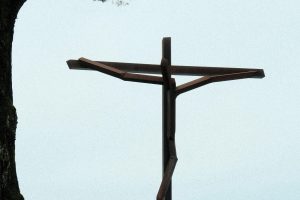
Image: Flickr cc via Ted Van Pelt